
Japan Sketchbook — What Japan taught me about minimalism, space, and quiet beauty
Japan Sketchbook — What Japan taught me about minimalism, space, and quiet beauty
I was lucky enough to travel to Japan earlier this year, and I’ve been carrying its quiet lessons within me ever since. Every so often my mind returns to some of the beautiful images of minimalist design and artistic expression that I encountered there. Japan has a way of asking you to notice what you usually rush past, and to experience each object as an expression of beauty in itself.
I was invited into the home of a descendant of a samurai warrior. While he told us about his family history and showed us the swords handed down from generation to generation , I was fascinated by the utter simplicity of his home, with its simple tatami mats and one beautiful carving above the dividing screen. In other buildings we visited there would be a beautiful painting on the dividing screen, nothing more needed.
That kind of restraint is startling when you first encounter it. But then it becomes soothing. You realise how much noise we carry in our own homes, our own studios, our own minds.
In Kyoto, I wandered into a furniture shop by chance. Everything was simple, elegant, and quietly confident. My husband bought a beautiful game — a carved board with pieces that nestled perfectly into their places. Nothing unnecessary. Nothing shouting. Just form, purpose, and grace.
We had a workshop with a laquer master who, while demonstrating his craft showed us the the simplest of forms could become something of great beauty. And we visited many art galleries and museums where we learned how the art of the past centuries continues to have a clear and lasting influence on Japans modern art.
And then we went to Naoshima, the so‑called art island ,where minimalism isn’t a style but a way of being. We cycled around the island, discovering artworks placed in landscapes that felt curated by the space around it. Single installations inside simple Japanese houses, where the emptiness around the art was part of the experience. Space wasn’t a void; it was a collaborator.
The Chichu Art Museum astonished us. Tadao Ando’s architecture is a study in restraint and precision, with concrete, light, shadow, and silence working together. Built underground, Chichu hides itself so the land remains whole. Inside, the works by Monet, Walter De Maria, and James Turrell aren’t just displayed; they’re framed by the building itself. You don’t simply look at the art — you look at the light that looks at the art.
It’s an experience that rearranges your sense of scale. You become aware of your footsteps, your breath, the way light moves across a wall. You realise how much beauty comes from what is not there.
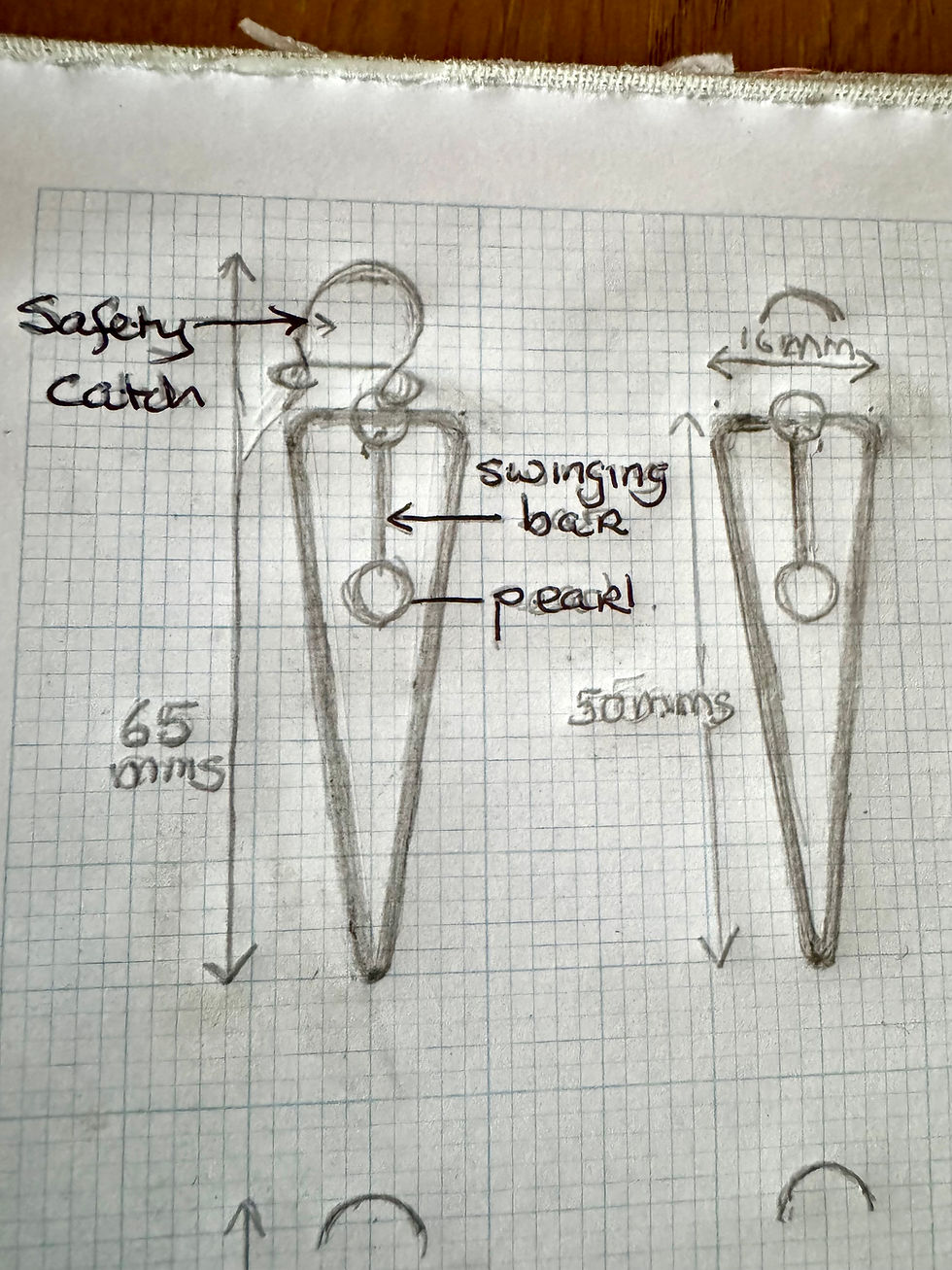
Since coming home, I find myself reaching for minimal, structural designs — pieces where changes in texture highlight the complexity of the metal.Japan taught me that simplicity isn’t emptiness. It’s intention. In my studio in Marlay Park, I’m leaning towards clean lines.
Japan reminded me that sometimes the simplest form, the angles and the texture are enough.


Comments